

FAQ PTFE thread and Tenara sewing thread
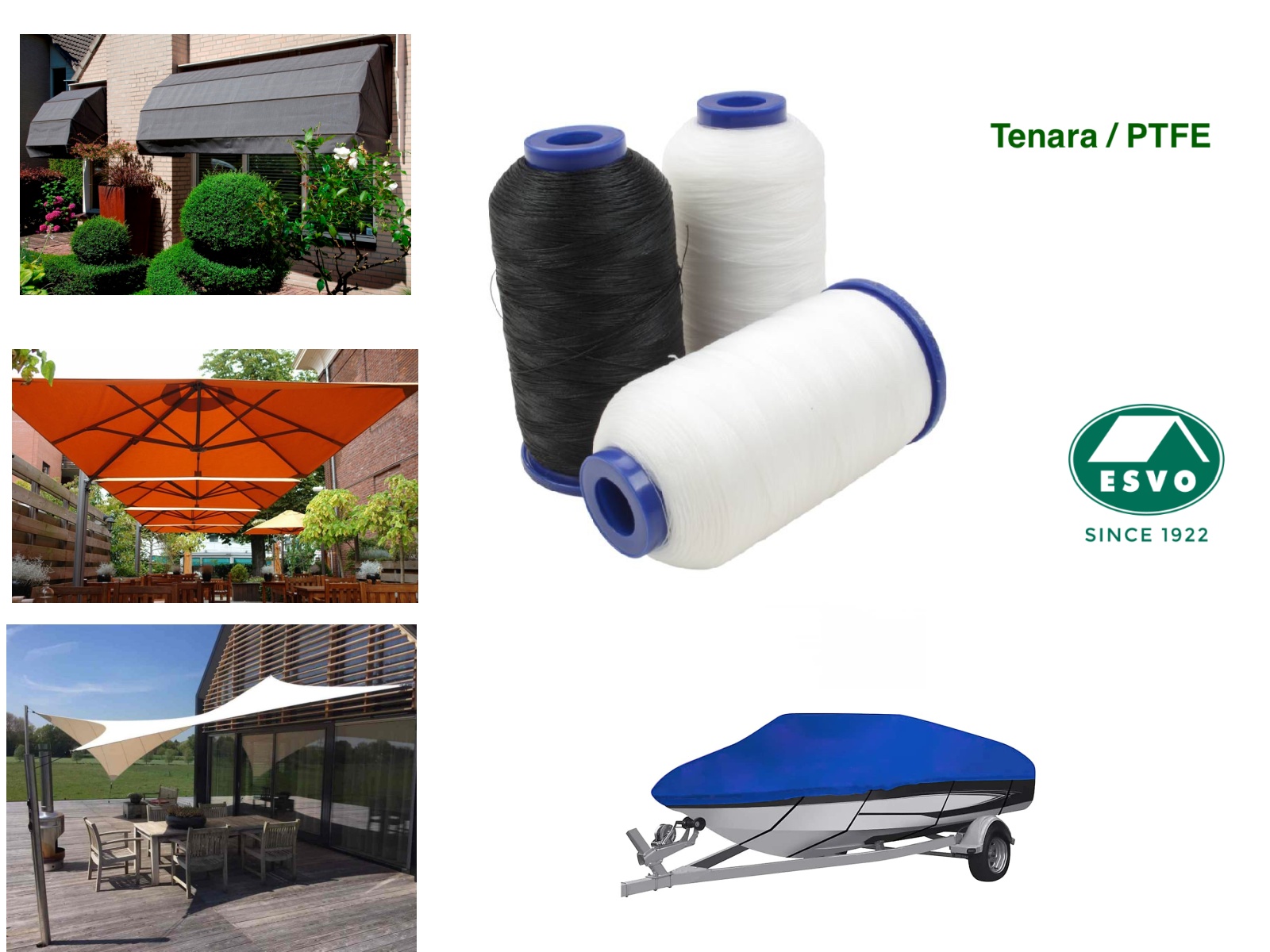
What are the 12 most frequently asked questions about PTFE thread, also known as Tenara thread?
As the market leader and specialist in PTFE thread, we are frequently asked the same questions. For your convenience and ours, we have listed them below. Below are the 12 FAQs and answers about this thread, along with links if you’d like to know more to get the most out of your PTFE sewing thread. If you can’t find a satisfactory answer or explanation here, please feel free to contact us and we’ll be happy to help. You’re always welcome to get advice and further information.
The topics include: differences compared to standard polyester sewing thread, processing, maintenance, materials and more.
What is ptfe thread, also known as Tenara thread?
P.T.F.E. stands for Polytetrafluoroethylene. PTFE thread has the following distinctive properties: durability under extreme weather conditions, heat resistance, low friction and chemical inertness. This sewing thread is produced as monofilament, multifilament or PTFE-coated, with options for coloured, filled or unfilled variants. It is therefore a high-quality synthetic fibre made from polytetrafluoroethylene (better known as Teflon™), which is valued for these specific characteristics. For instance, this special sewing thread is rot- and mould-resistant and impervious to UV radiation, salt water, acid (acid rain) and even cleaning agents (such as bleach). It is therefore a sewing thread for outdoor fabrics and canvas, which makes a difference to the lifespan of your textile construction.
Tenara is a brand name of the American company Gore, also known for Gore-Tex. In addition to Tenara thread, there is an identical, more affordable PTFE sewing thread.
FAQ – the 12 most frequently asked questions and answers about PTFE sewing thread, also known as Gore Tenara thread
The most frequently asked questions about PTFE sewing thread (polytetrafluoroethylene), often referred to by the brand name GORE TENARA, usually concern the extreme durability and specific processing requirements of this material. The 12 most important questions and answers are:
1. Is all ptfe thread the same?
Yes, provided the sewing thread consists of 100% PTFE and the supplier has a good reputation – as we do. Standard PTFE sewing thread is, incidentally, considerably cheaper than Gore Tenara thread.
2. Why and when should PTFE sewing thread be used instead of standard sewing thread?
Standard sewing thread, such as 100% polyester, works perfectly well for standard outdoor fabrics. It lasts for many years and is therefore ideal for items such as awning covers, shade sails, outdoor cushions, and so on. However, after many, many years, this polyester sewing thread gradually breaks down due to the effects of ultraviolet light. If, for example, polyester thread is used in a bimini or boat cover and the boat is constantly exposed to salt water, then Tenara thread or standard PTFE thread becomes a very attractive option, as this special thread is rot- and mould-resistant and 100% impervious to UV radiation, salt water, acid (acid rain) and even cleaning products. This distinctive sewing thread therefore loses none of its strength due to sunlight or chemical exposure. Precisely because PTFE thread, or Tenara sewing thread, lasts so long, it is often the case that the stitching in the fabric lasts longer than the fabric itself….
3. Does Gore Tenara thread really last a lifetime?
Gore, the manufacturer of Tenara thread, offers a limited lifetime warranty on their ptfe thread. This is only to be expected, as the conditions for the fabric or the cover vary from user to user. In the Netherlands, a 15-year warranty against thread breakage is very common. This warranty can also be easily provided, naturally including standard PTFE thread – which is the same as Tenara sewing thread. See also the detailed answer to question 2, and it will be clear just how strong and durable PTFE thread is.
Using ptfe thread or Tenara thread on a sewing machine
4. Can Gore Tenara sewing thread or standard PTFE thread be used on a domestic sewing machine?
That is a good question and also slightly concerning, as PTFE thread is very smooth and stiff. This makes it difficult to find the correct thread tension. Skilled users of a standard sewing machine can manage it, but others find it problematic. Outsourcing the job to a local sewing workshop often offers the solution!
5. What needle, tension and looper do I need for PTFE thread?
For those who are handy, here are a few tips on using ptfe thread (or the identical Tenara sewing thread) on a standard sewing machine:
- Tension: PTFE thread requires less upper thread tension than polyester thread. As PTFE thread has no natural friction, the adjustment and balance between the upper and lower threads is very important.
- Bobbin tension: adjust the bobbin tension so that the bobbin case slowly drops down when you hold it by the thread (like a yo-yo motion).
- Upper tension: Start with a standard setting (usually between 3 and 5) and increase this gradually to a maximum of 7. PTFE thread often requires more tension than polyester to form a tight stitch without loops on the underside. Stitch length: 3.5–5.0 mm. - Balance: The knot of the stitch must lie exactly in the centre of the fabric layers. Can you see the upper thread on the underside? If so, increase the upper tension.
- Needles for PTFE thread: the use of special needles (e.g. MR or Serv7) is recommended to prevent skipped stitches in the seam. The needle must be large enough to allow the sewing thread to slide smoothly through the eye, but thin enough to prevent holes that are too large from being punched in the fabric. For the most commonly used PTFE thread, size 40 (Tex number 90), a needle size of 100/16 to 120/19 is recommended.
- Looper: sewing PTFE thread on a domestic sewing machine – and indeed on all sewing machines – works best with a rotary looper
6. What thickness of PTFE thread or Tenara and what needle do I need for my fabric?
For standard outdoor fabrics, such as for a bimini, boat cover or sunshade, thickness 40 (Tex 90) or 49 (also Tex number 90) is often used. For very thick sails, there is a thicker ptfe thread with a Tex number of 138. For the most commonly used PTFE thread with a 40 (Tex number 90) thread, a needle size of 100/16 to 120/19 is recommended.
P.S. Click here for a comprehensive explanation of the meaning of Tex numbers or coding for sewing threads.
7. How do I prevent skipped stitches in the fabric?
PTFE thread has a tendency to ‘jump’ or form loops at the looper. Here are a few tips to prevent this:
- Horizontal thread feed: Position the thread spool horizontally (like a roll of toilet paper) rather than vertically. This prevents extra kinks or twists in the thread that cause skipped stitches.
- Stitch length: Use a slightly longer stitch length (3.5 to 5 mm) for outdoor fabrics. This reduces the risk of perforating the fabric and gives the thread room to lie flat.
Further general questions about PTFE Tenara thread
8. How much PTFE thread do I need to stitch my fabric?
For an average DIY project (such as a boat cover or sunshade), a 300-metre spool is usually more than enough; this will allow you to sew approximately 50 to 60 metres of seam.
9. Is PTFE thread colourfast?
Yes, both PTFE thread and Tenara sewing thread are not dyed, so the pigments are IN the thread. This makes this special sewing thread colourfast: the colours do not fade. Please also see the distinctive properties mentioned in answer 2 of this FAQ.
10. Which colour of PTFE thread is the most versatile?
The transparent, colourless sewing thread is by far the best-selling version of PTFE thread. The reason is that this colourless version takes on the colour of the fabric being sewn. An additional advantage is that you therefore need fewer spools in different colours.
11. Why is ptfe thread more expensive than standard thread?
PTFE sewing thread is not cheap. Compared to polyester thread, it is – depending on the supplier – as much as 5 to 10 times more expensive. Standard PTFE thread is cheaper than Gore Tenara thread, provided it is supplied by a reliable sewing thread supplier.
Ultimately, using PTFE thread works out to be cost-effective, as you’ll never have to re-sew or have your fabric repaired again. So, in the long run, using this special sewing thread saves you money!
Advice on PTFE Tenara sewing thread – welcome!
12. I NEED MORE ADVICE ON GORE TENARA OR STANDARD PTFE THREAD, WHERE CAN I GET IT?
As mentioned, we are the market leader and specialist in both sewing threads and waterproof outdoor fabrics. And as stated, our PTFE thread is identical to Tenara sewing thread. Nevertheless, we can imagine that you might have some questions. That is why we are happy to assist you if you need advice or further information. You are always welcome. Click here for our contact page.
- ESVO Campingshop B.V.
- Marconistraat 4
- 1131 JW Volendam - Netherlands
- Company number: 67554601
- VAT number: NL857074635B01
Add extra item(s)
My order has already been placed but I want to add another item
Terms and Conditions and Right of Withdrawal
- Monday to Friday:
- 8:30 AM – 12:00 PM and 1:00 PM – 4:30 PM
- Saturday and Sunday:
- Closed


© 2004 - 2026 ESVO Campingshop B.V..